
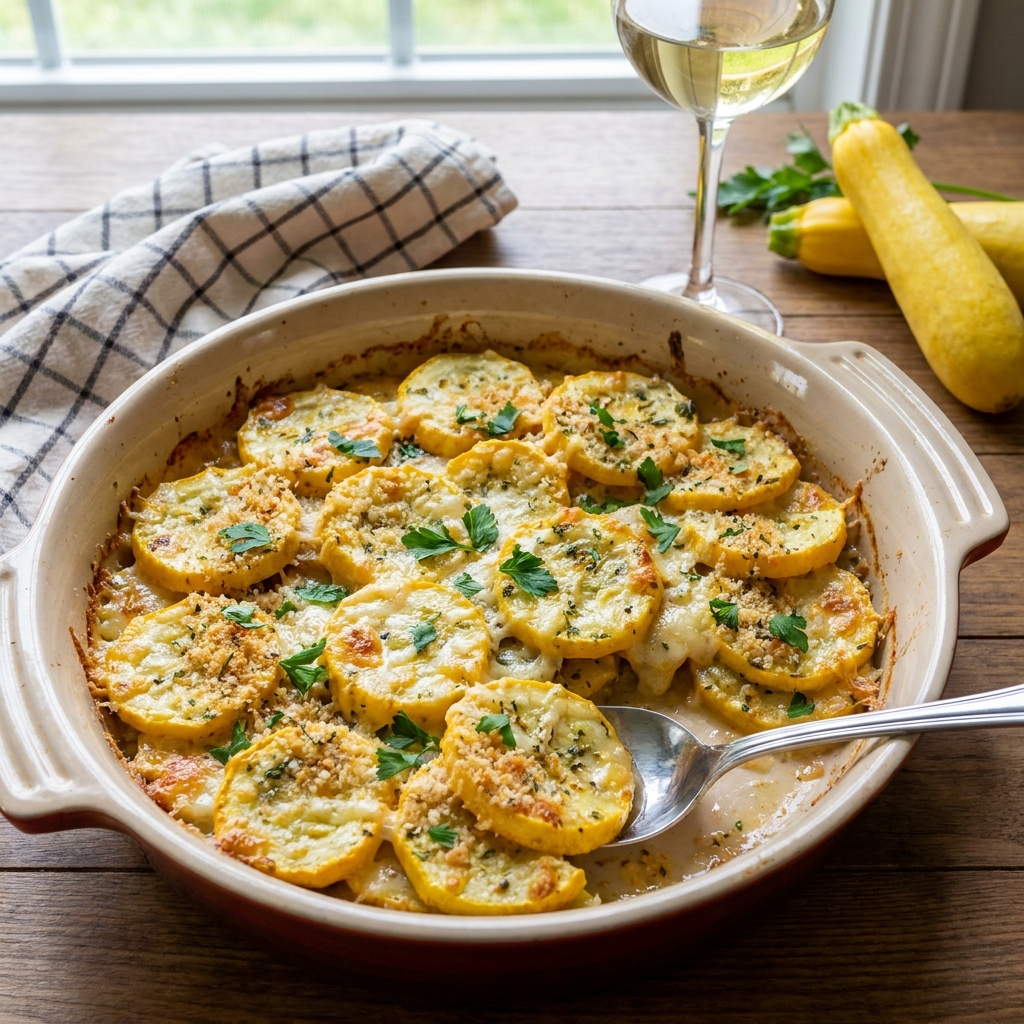
Parmesan baked yellow squash is an easy, flavorful side dish that turns fresh summer squash into golden, cheesy bites with tender centers and deliciously crisp edges. Made with simple ingredients such as yellow squash, Parmesan cheese, breadcrumbs, garlic, and Italian herbs, this oven-baked recipe is perfect when you want a vegetable side that feels comforting without requiring a lot of preparation.
Yellow squash is naturally mild, slightly sweet, and tender, which makes it an excellent vegetable for baking. When paired with savory Parmesan cheese and aromatic seasonings, it develops a beautifully golden crust while remaining soft and flavorful inside. The Parmesan adds a nutty, salty flavor that complements the natural sweetness of the squash.
This baked yellow squash recipe is especially useful during the summer when yellow squash is plentiful at farmers markets, grocery stores, or in the garden. Instead of simply sautéing or steaming squash, baking it with Parmesan gives it a completely different texture and flavor. It is also a great way to encourage the whole family to eat more vegetables.
One of the best things about this recipe is how versatile it is. You can serve Parmesan baked yellow squash alongside grilled chicken, roasted turkey, steak, pork chops, fish, or pasta. It also works beautifully as part of a vegetarian dinner when paired with a fresh salad, rice, quinoa, or another favorite side dish.
For the best results, choose firm yellow squash that feels heavy for its size and has smooth, unblemished skin. Slice the squash evenly so that every piece cooks at approximately the same rate. A hot oven helps the edges brown while keeping the inside tender.
Whether you’re looking for a quick weeknight side dish, a summer vegetable recipe, or a simple way to use extra yellow squash, this Parmesan baked yellow squash is an easy recipe you’ll want to make again.
Ingredients:
- 4 medium yellow squash
- ½ cup finely grated Parmesan cheese
- ½ cup breadcrumbs or panko breadcrumbs
- 2 tablespoons olive oil
- 2 cloves garlic, finely minced
- 1 teaspoon Italian seasoning
- ½ teaspoon garlic powder
- ½ teaspoon paprika
- ¼ teaspoon onion powder
- ¼ teaspoon black pepper
- ½ teaspoon salt, or to taste
- 2 tablespoons finely chopped fresh parsley
- ¼ cup shredded mozzarella, optional
- Extra Parmesan cheese, for topping
- Lemon wedges, optional, for serving
Preparation:
Step 1: Prepare the yellow squash
Preheat the oven to 425°F (220°C).
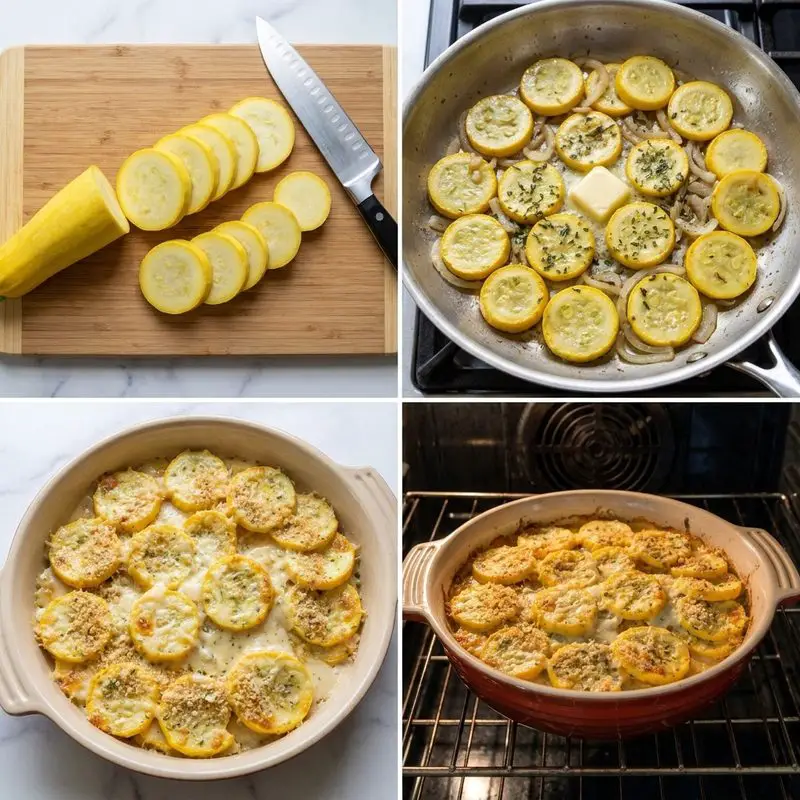
Wash the yellow squash thoroughly under cool running water and pat it dry with a clean kitchen towel.
Trim off both ends of each squash. There is no need to peel yellow squash because the skin is tender and adds color, texture, and nutrients.
Slice the squash into rounds approximately ¼-inch thick. Try to keep the slices as uniform as possible so they cook evenly.
If your squash is particularly large and contains mature seeds, you can cut it lengthwise and remove some of the soft center before slicing.
Step 2: Prepare the seasoning mixture
In a small bowl, combine the Parmesan cheese, breadcrumbs, Italian seasoning, garlic powder, paprika, onion powder, and black pepper.
Mix well until all the dry ingredients are evenly distributed.
This mixture creates the flavorful coating that will become golden and crisp during baking.
If you are using mozzarella, you can reserve it for the final few minutes of baking rather than mixing it into the breadcrumb mixture.
Step 3: Season the squash
Place the sliced yellow squash in a large mixing bowl.
Add the olive oil and minced garlic. Toss gently until the squash is lightly coated.
Sprinkle the Parmesan-breadcrumb mixture over the squash and toss again until the slices are evenly coated.
Try not to crush or break the squash slices while mixing.
If you prefer a more heavily coated crust, you can press the Parmesan mixture gently onto each slice before placing it on the baking sheet.
Step 4: Arrange the squash
Line a large baking sheet with parchment paper or lightly grease it with olive oil.
Arrange the squash slices in a single layer.
Avoid overlapping the slices. If the squash pieces are crowded together, they will release steam as they cook, which can prevent the coating from becoming crisp.
If necessary, use two baking sheets instead of overcrowding one.
For extra browning, lightly drizzle or spray the tops with a small amount of olive oil.
Step 5: Bake the yellow squash
Place the baking sheet in the preheated oven.
Bake for approximately 15–20 minutes, or until the squash becomes tender and the Parmesan coating is golden brown.
Cooking time will depend on the thickness of your slices and the moisture content of the squash.
For more even browning, turn the slices carefully halfway through baking.
Step 6: Add extra cheese
If you want a cheesier version, sprinkle shredded mozzarella or additional Parmesan over the squash during the final 3–5 minutes of baking.
Return the pan to the oven and bake until the cheese melts and becomes lightly golden.
For an especially golden top, you can turn on the broiler for 1–2 minutes at the end.
Watch carefully during broiling because Parmesan and breadcrumbs can brown quickly.
Step 7: Garnish and serve
Remove the baked yellow squash from the oven and allow it to rest for a few minutes.
Sprinkle with freshly chopped parsley and, if desired, a little extra Parmesan cheese.
For a bright finish, serve with fresh lemon wedges and squeeze a little lemon juice over the squash just before eating.
The combination of crispy Parmesan coating, tender squash, garlic, and fresh lemon creates a delicious balance of savory and fresh flavors.
Variation
Crispy Panko Parmesan Yellow Squash
For extra crunch, use panko breadcrumbs instead of regular breadcrumbs.
Panko creates a lighter, airier crust that becomes especially crisp in the oven.
For an even crunchier topping, combine panko with Parmesan and a small drizzle of olive oil before coating the squash.
Cheesy Baked Yellow Squash
Add shredded mozzarella during the final few minutes of baking.
You can also combine Parmesan with mozzarella, cheddar, or provolone for a richer cheese topping.
Garlic Parmesan Yellow Squash
Increase the garlic for a stronger garlic flavor. You can use additional fresh minced garlic or add a small amount of roasted garlic to the Parmesan mixture.
Fresh parsley makes a great finishing herb for this variation.
Spicy Parmesan Yellow Squash
Add ¼–½ teaspoon of crushed red pepper flakes to the breadcrumb mixture.
You can also add a pinch of cayenne pepper or smoked paprika for extra heat and depth of flavor.
Italian Herb Yellow Squash
Add dried oregano, basil, thyme, or rosemary to the Parmesan mixture.
Fresh basil or parsley can be sprinkled over the finished squash before serving.
Low-Carb Parmesan Yellow Squash
For a lower-carbohydrate version, replace the breadcrumbs with finely ground pork rinds, almond flour, or another suitable low-carb coating.
Keep the Parmesan because it provides both flavor and excellent browning.
Lemon Parmesan Yellow Squash
Add a little finely grated lemon zest to the Parmesan mixture and finish the baked squash with fresh lemon juice.
This version is especially delicious alongside grilled fish or chicken.
COOKING Note:
The most important thing when making Parmesan baked yellow squash is avoiding excess moisture.
Yellow squash naturally contains a lot of water. When it is baked, some of that moisture is released. If the slices are packed too closely together, they can steam instead of roast, leaving the coating softer rather than crisp.
For the best texture, spread the squash slices in a single layer with a little space between them.
Another important factor is slice thickness. If the slices are extremely thin, they may become soft or overcook quickly. If they are too thick, the center may remain firm while the Parmesan coating becomes very dark.
A thickness of approximately ¼ inch works well because it allows the squash to become tender while the coating has enough time to brown.
Do not add too much salt at the beginning. Parmesan is naturally salty, so it is better to season lightly and taste after cooking if additional salt is needed.
If your yellow squash is especially watery, you can lightly salt the slices and let them sit for 10 minutes before patting them dry. This can help remove some surface moisture and improve browning.
For maximum crispiness, serve the squash soon after baking. As it sits, steam from the hot squash can soften the Parmesan coating.
Serving Suggestions:
This Parmesan baked yellow squash is an incredibly versatile side dish and works with many different meals.
Serve it alongside grilled chicken for a simple weeknight dinner. The crispy Parmesan crust adds plenty of flavor to an otherwise simple meal.
It also pairs beautifully with grilled steak or roasted beef. The mild sweetness of the yellow squash provides a fresh vegetable contrast to richer meats.
For seafood, serve the squash with baked salmon, grilled shrimp, cod, tilapia, or another mild white fish. Lemon Parmesan squash is especially delicious with seafood.
For a vegetarian meal, serve the squash with a large green salad, roasted potatoes, rice, quinoa, or pasta.
You can also add the baked squash to a Mediterranean-inspired dinner with tomatoes, cucumbers, olives, feta cheese, and crusty bread.
For a casual family meal, serve it alongside spaghetti and marinara sauce instead of traditional vegetable sides.
The squash can also be served as an appetizer. Arrange the golden slices on a platter with a bowl of marinara sauce, garlic aioli, ranch dressing, or creamy herb dip.
Tips:
- Choose firm yellow squash: Fresh squash should feel firm and have smooth, unblemished skin.
- Slice evenly: Uniform slices cook at the same rate and prevent some pieces from burning while others remain undercooked.
- Don’t overcrowd the pan: Give each slice enough room for hot air to circulate.
- Use freshly grated Parmesan: It melts and browns beautifully and usually provides better flavor than very finely powdered cheese.
- Try panko breadcrumbs: Panko creates a particularly crispy crust.
- Pat watery squash dry: If your squash releases a lot of moisture, gently pat it dry before coating.
- Don’t use too much oil: Excess oil can make the coating heavy rather than crisp.
- Turn halfway through: This helps both sides brown more evenly.
- Watch the final minutes: Parmesan can go from golden to burnt quickly.
- Use the broiler carefully: One or two minutes can create a beautiful golden finish.
- Add fresh herbs after baking: Parsley and basil taste brighter when added at the end.
- Finish with lemon: A small squeeze of lemon balances the richness of the Parmesan.
- Serve immediately: The coating is crispiest when the squash is fresh from the oven.
- Use two pans if necessary: A crowded pan produces steamed squash instead of roasted squash.
- Experiment with seasonings: Italian seasoning, smoked paprika, red pepper flakes, and garlic all work beautifully.
- Don’t overbake: Yellow squash should be tender but not mushy.
Prep Time:
10 minutes
Cooking Time:
15–20 minutes
Total Time:
25–30 minutes
Nutritional Information:
Approximate values per serving and may vary depending on the exact ingredients, breadcrumbs, cheese, olive oil, and serving size.
Calories: Approximately 180 kcal
Protein: Approximately 8 g
Sodium: Approximately 430 mg
FAQs
Do I need to peel yellow squash before baking?
No. Yellow squash has a tender, edible skin, so there is no need to peel it. Keeping the skin on also adds attractive color and texture.
Why is my baked yellow squash watery?
Yellow squash naturally contains a lot of water. Overcrowding the baking sheet can cause the slices to steam rather than roast. Keeping the squash in a single layer with space between the pieces helps moisture evaporate.
How do I make Parmesan baked yellow squash crispy?
Use a hot oven, slice the squash evenly, avoid overcrowding the pan, use panko breadcrumbs, and lightly coat the slices with olive oil. Serving them immediately after baking also helps preserve their crisp texture.
Can I make this recipe without breadcrumbs?
Yes. Parmesan alone can create a delicious crust. You can also use panko, almond flour, crushed crackers, or another suitable coating depending on your preferences.
Can I use zucchini instead of yellow squash?
Absolutely. Zucchini can be substituted for yellow squash using the same basic method. Because both vegetables contain plenty of water, avoid overcrowding the pan.
Can I use frozen yellow squash?
Fresh yellow squash is recommended for this recipe because frozen squash contains additional moisture and can become very soft after thawing. If using frozen squash, thaw it completely and pat it very dry before coating.
Can I prepare Parmesan baked yellow squash ahead of time?
You can slice and season the squash shortly before baking, but for the best texture, bake it close to serving time. The Parmesan coating is crispiest when freshly baked.
What Parmesan cheese is best?
Freshly grated Parmesan is an excellent choice because it melts and browns well. You can also use Pecorino Romano for a stronger, saltier flavor.
Can I make this yellow squash recipe in an air fryer?
Yes. Arrange the coated squash slices in a single layer in the air fryer basket and cook until tender and golden. Because air fryers vary, check the squash frequently during cooking to prevent the Parmesan coating from becoming too dark.
What can I serve with baked yellow squash?
It pairs well with chicken, steak, pork, salmon, shrimp, pasta, rice, quinoa, roasted potatoes, salads, and other vegetables.
Can I make this recipe gluten-free?
Yes. Use certified gluten-free breadcrumbs or panko. Parmesan, yellow squash, garlic, herbs, and olive oil are naturally gluten-free.
Can I make Parmesan baked yellow squash without eggs?
Yes. This recipe does not require eggs because the olive oil helps the Parmesan-breadcrumb mixture adhere to the squash. If you want a thicker coating, you can experiment with another suitable binder.
How do I keep the Parmesan from burning?
Bake the squash on the middle rack and avoid placing it too close to the broiler. If the cheese begins browning too quickly while the squash is still firm, lower the oven temperature slightly or loosely cover the pan with foil for part of the cooking time.
Can I add mozzarella?
Yes. Add mozzarella during the final few minutes of baking so it melts without becoming overly browned.
Is yellow squash the same as zucchini?
Yellow squash and zucchini are both summer squash, but they are different varieties. They can often be used interchangeably in recipes, although their shape, color, and flavor can differ slightly.
Conclusion
Parmesan baked yellow squash is one of those simple vegetable recipes that proves you do not need complicated ingredients to create an impressive side dish. Fresh yellow squash becomes tender and flavorful in the oven while Parmesan, breadcrumbs, garlic, and Italian herbs create a delicious golden coating.
The recipe is quick enough for a busy weeknight but flavorful enough to serve when you’re entertaining. It pairs with almost everything, from grilled chicken and steak to salmon, pasta, rice, and fresh salads.
For the best results, remember the key techniques: choose firm fresh squash, slice it evenly, avoid overcrowding the baking sheet, and bake at a high enough temperature to encourage browning. Freshly grated Parmesan and panko breadcrumbs can make the coating especially crispy.
You can also easily adapt this recipe to suit your family’s preferences. Make it spicy with red pepper flakes, extra cheesy with mozzarella, fresh and bright with lemon and herbs, or lower in carbohydrates by replacing the breadcrumbs with a suitable alternative.
Whether you’re looking for a new summer squash recipe, an easy weeknight vegetable side, or a delicious way to use an abundance of garden squash, this Parmesan baked yellow squash is a simple recipe that delivers plenty of flavor with minimal effort.
1 thought on “Easy Parmesan Baked Yellow Squash – Crispy, Cheesy & Delicious”