
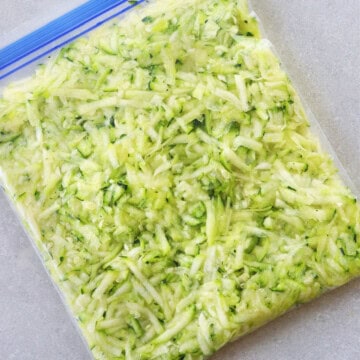
Learning how to freeze shredded zucchini is one of the easiest ways to preserve a summer zucchini harvest and make sure you always have zucchini ready for your favorite recipes. If your garden produces more zucchini than you can use, or you find a great deal on fresh zucchini at the grocery store or farmers market, freezing shredded zucchini can save both time and food.
Zucchini is especially useful when frozen in shredded form because it can be added directly to many cooked recipes later. Instead of thawing and chopping whole zucchini, you can portion the shredded zucchini into convenient amounts and keep it ready for zucchini bread, muffins, cakes, casseroles, soups, fritters, and other recipes.
The process is simple, but there are a few important details that make a big difference. Zucchini contains a large amount of water, so frozen shredded zucchini will release moisture when it thaws. For this reason, you should not expect thawed zucchini to have the same crisp texture as fresh zucchini. Frozen zucchini is best used in recipes where the vegetable is cooked or incorporated into a batter, filling, soup, or casserole.
The good news is that you do not need complicated equipment. A box grater or food processor, freezer-safe bags or containers, and a few minutes of preparation are usually all you need.
For most recipes, the best approach is to shred the zucchini while it is fresh, portion it into recipe-sized amounts, remove excess air from the packaging, label it with the date, and freeze it flat. When you need zucchini later, simply thaw the amount required and drain or squeeze away excess moisture when the recipe calls for it.
Whether you have a few extra zucchini or an entire garden harvest, this method makes it easy to preserve that fresh summer produce for months.
Ingredients:
- Fresh zucchini
- Water, for washing
- Salt, optional depending on the intended recipe
- Freezer-safe bags or airtight freezer containers
- Freezer labels or permanent marker
Preparation:
Step 1: Choose fresh zucchini
Start with firm, fresh zucchini without soft spots, mold, deep bruises, or signs of spoilage.
Small and medium zucchini are usually easy to shred because they have tender skin and relatively small seeds. Larger zucchini can also be frozen, but very large zucchini may contain more seeds and watery pulp.
If you are using oversized garden zucchini, cut it lengthwise first and inspect the center. If the seeds are large, firm, or overly developed, scoop out the seedy center before shredding.
For the best frozen quality, freeze zucchini while it is fresh rather than waiting until it begins to soften.
Step 2: Wash the zucchini
Rinse the zucchini thoroughly under cool running water.
Gently rub the surface to remove dirt and any residue. Dry the zucchini with a clean kitchen towel or paper towel.
There is generally no need to peel zucchini before shredding it. The green skin adds color, nutrients, and texture, and it becomes tender when cooked.
If you prefer a lighter-colored result for certain recipes, you can peel the zucchini, but this is completely optional.
Step 3: Trim the ends
Cut off the stem end and the blossom end of each zucchini.
If the zucchini is small or medium-sized, you can usually shred the entire vegetable after trimming.
For large zucchini, cut it open and remove any large, mature seeds or spongy center before shredding. This can help produce a better texture after thawing.
Step 4: Shred the zucchini
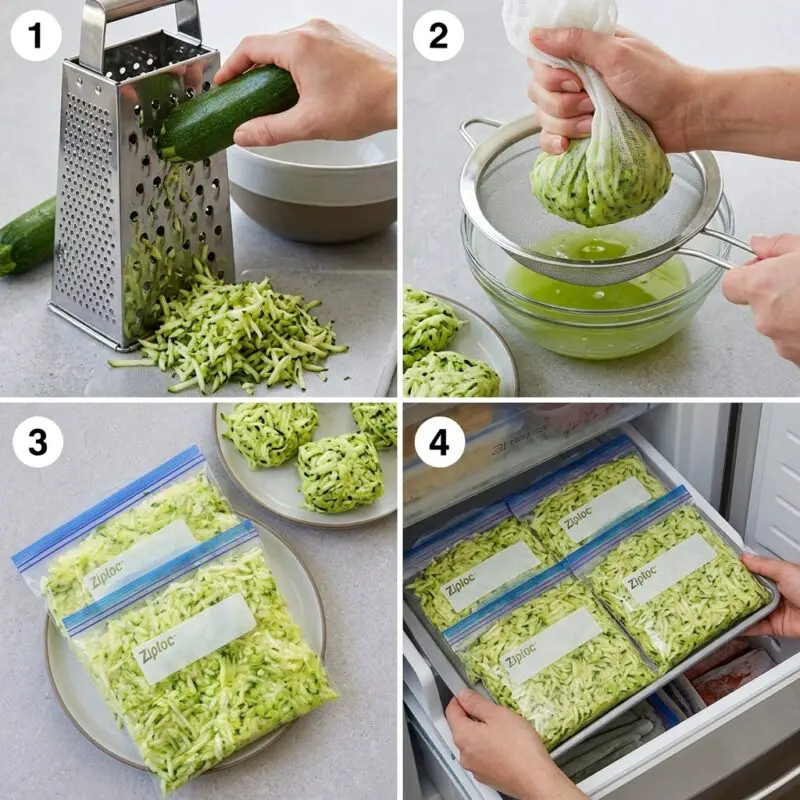
Use the large holes of a box grater to shred the zucchini.
You can also use the shredding attachment on a food processor if you are preparing a large quantity.
Try to keep the shreds relatively uniform in size. Medium-sized shreds are particularly useful for baking because they blend easily into the batter while still providing moisture and zucchini flavor.
There is no need to shred the zucchini extremely finely unless a specific recipe calls for it.
Step 5: Decide whether to drain the zucchini
One of the most useful things to understand about freezing shredded zucchini is that you do not always need to remove all of its moisture before freezing.
For recipes such as zucchini bread, muffins, and cakes, many cooks freeze shredded zucchini without squeezing it completely dry. The moisture can be useful when the zucchini is incorporated into a batter.
However, if you know you will be using the zucchini for fritters, zucchini cakes, or recipes where excess moisture is undesirable, you may want to drain or lightly squeeze it before freezing.
The best method depends on how you plan to use the zucchini later.
Step 6: Portion the zucchini
Divide the shredded zucchini into convenient portions.
For example, if your favorite zucchini bread recipe uses 2 cups of shredded zucchini, freeze the zucchini in 2-cup portions.
This makes future cooking much easier because you can take out exactly what you need without repeatedly opening and closing a large container.
You can also freeze smaller portions if you frequently make muffins, soups, sauces, or small batches of recipes.
Step 7: Package the zucchini
Place each portion into a freezer-safe bag or airtight freezer container.
If using freezer bags, gently press the bag flat and remove as much excess air as possible before sealing it.
Removing excess air helps reduce freezer burn and helps preserve the quality of the zucchini.
Flattening the bags also saves valuable freezer space and makes the zucchini faster to thaw later.
Step 8: Label the packages
Write the contents and date on each freezer bag or container.
For example:
Shredded Zucchini – 2 cups – August 2026
Adding the portion size is also helpful because you will know exactly how much zucchini is inside without opening the package.
Proper labeling makes it much easier to organize your freezer and use older packages first.
Step 9: Freeze the zucchini
Place the sealed bags or containers in the freezer.
If using freezer bags, lay them flat until completely frozen. Once solid, you can stack them vertically or horizontally to save space.
For best quality, keep the freezer at 0°F (-18°C) or below.
Frozen zucchini is best used within approximately 8–12 months for quality, although properly frozen food can remain safe longer when continuously kept at the proper freezer temperature.
Step 10: Thaw before using
When you are ready to use your frozen shredded zucchini, transfer the required portion to the refrigerator and allow it to thaw.
You can also thaw it more quickly in a bowl in the refrigerator or use it according to the recipe instructions.
Once thawed, zucchini will release quite a bit of water. This is normal.
For baking recipes, you may be able to use the thawed zucchini along with some of its liquid, depending on the recipe.
For fritters, pancakes, savory cakes, or other recipes where excess water can cause problems, place the thawed zucchini in a clean kitchen towel and squeeze out the excess liquid before using.
Variation
Freeze Zucchini in Recipe-Sized Portions
One of the most convenient methods is to freeze zucchini according to your favorite recipes.
If your zucchini bread requires 2 cups, freeze 2 cups per bag. If your muffin recipe requires 1 cup, prepare 1-cup portions.
This eliminates measuring later and makes baking much faster.
Freeze Small Portions for Smoothies
Although zucchini is not usually the first ingredient people think about for smoothies, small portions of frozen zucchini can be blended into smoothies for added vegetables and a creamy texture.
Use clean, fresh zucchini and freeze it in small portions that are convenient for your smoothie recipes.
Freeze Zucchini Without Squeezing
If you mainly plan to use your zucchini for bread, muffins, cakes, or other baked goods, you can freeze the shredded zucchini without completely removing the moisture.
After thawing, follow the specific recipe instructions regarding whether the zucchini should be drained.
Freeze Drained Zucchini
For recipes where excess moisture is a problem, lightly drain the shredded zucchini before packaging.
This is particularly useful if you regularly make zucchini fritters, savory pancakes, or similar recipes.
COOKING Note:
The most important thing to remember about frozen shredded zucchini is that its texture changes after freezing and thawing.
Fresh zucchini has a firm, crisp texture because its cells contain water. Freezing creates ice crystals that damage some of those cell structures. After thawing, the zucchini becomes softer and releases more liquid.
That means frozen shredded zucchini is not ideal for salads or recipes where you want fresh, crunchy zucchini.
Instead, use it in cooked recipes such as zucchini bread, muffins, cakes, casseroles, soups, sauces, pasta dishes, fritters, and other recipes where the zucchini will be cooked.
Another important point is that you should not automatically squeeze all the moisture out of thawed zucchini. The correct amount of moisture depends on the recipe.
For example, zucchini bread may benefit from some of the moisture released during thawing, while zucchini fritters generally need well-drained zucchini so they become crisp instead of soggy.
If you are unsure, check the original recipe before draining the thawed zucchini.
Serving Suggestions:
Frozen shredded zucchini is extremely versatile once thawed and can be used in many recipes.
Zucchini Bread
One of the most popular ways to use frozen shredded zucchini is in homemade zucchini bread. The soft texture of thawed zucchini works beautifully in quick breads and helps keep the loaf moist.
Zucchini Muffins
Add thawed shredded zucchini to muffin batter with cinnamon, nutmeg, vanilla, chocolate chips, or chopped nuts for a delicious breakfast or snack.
Zucchini Cake
Frozen zucchini works well in cakes because the vegetable adds moisture without overpowering the flavor.
Zucchini Fritters
For fritters, make sure to squeeze out excess moisture after thawing. Combine the zucchini with eggs, breadcrumbs or flour, cheese, and seasonings before cooking until golden brown.
Zucchini Casserole
Thawed zucchini can be incorporated into cheesy casseroles with onions, eggs, breadcrumbs, herbs, or other vegetables.
Soups
Add frozen shredded zucchini to vegetable soups, chicken soup, minestrone, or creamy soups. Since it becomes soft after thawing, it blends easily into soups.
Pasta Sauces
Thawed zucchini can be cooked with garlic, onion, tomatoes, herbs, and Parmesan to create a simple vegetable pasta sauce.
Smoothies
Small portions of frozen zucchini can be blended into smoothies with fruit, yogurt, milk, or other ingredients.
Tips:
- Freeze zucchini while it is fresh: The fresher the zucchini, the better the quality after freezing.
- Do not peel it unless you want to: Zucchini skin is tender and can be frozen along with the flesh.
- Remove large seeds from oversized zucchini: Mature seeds can have a tougher texture.
- Use freezer-safe packaging: Ordinary storage bags may not protect the zucchini as well over long periods.
- Remove excess air: Air trapped inside freezer bags can contribute to freezer burn.
- Freeze in recipe-sized portions: This makes future cooking much easier.
- Label every package: Include both the date and portion size.
- Freeze bags flat: Flat packages freeze quickly and stack efficiently.
- Do not expect fresh texture after thawing: Frozen zucchini is best for cooked recipes.
- Drain only when necessary: Some recipes benefit from retaining the zucchini’s moisture.
- Use older packages first: Organize your freezer so older zucchini is used before newer batches.
- Avoid refreezing thawed zucchini: Repeated freezing and thawing can significantly reduce quality.
- Do not freeze spoiled zucchini: Freezing does not improve the quality or safety of produce that is already spoiled.
- Use airtight packaging: Good packaging helps protect against freezer burn and unwanted freezer odors.
- Keep the freezer at 0°F (-18°C) or below: Stable freezing temperatures help maintain quality.
- Freeze in small batches: Smaller packages are easier to thaw and use.
- Consider weighing portions: If you make the same recipes regularly, weighing zucchini portions can make preparation even more convenient.
- Squeeze thawed zucchini for fritters: Removing excess liquid helps savory zucchini recipes become crispier.
- Keep moisture for some baking recipes: Always follow the recipe because some baked goods benefit from the liquid released by thawed zucchini.
Prep Time:
15–20 minutes
Cooking Time:
0 minutes
Total Time:
15–20 minutes, plus freezing time
Nutritional Information:
Because this is a food-preservation method rather than a prepared dish, nutritional values depend entirely on the amount of zucchini used.
Calories: Approximately 17 calories per 100 g of raw zucchini
Protein: Approximately 1.2 g per 100 g
Sodium: Approximately 8 mg per 100 g
Values are approximate and can vary depending on the size and variety of zucchini.
FAQs
Can you freeze shredded zucchini?
Yes, shredded zucchini freezes very well. It is particularly convenient for recipes such as zucchini bread, muffins, cakes, casseroles, soups, and fritters.
Do you have to blanch shredded zucchini before freezing?
For shredded zucchini intended for many cooked recipes, blanching is generally not necessary. Shredding, portioning, packaging, and freezing is a simple method that works well.
Should I squeeze water out of zucchini before freezing?
It depends on how you plan to use it. You can leave much of the moisture in zucchini intended for baking, while draining it can be helpful for recipes such as fritters where excess moisture is undesirable.
How long does shredded zucchini last in the freezer?
For the best quality, use frozen shredded zucchini within approximately 8–12 months when stored continuously at 0°F (-18°C) or below.
Can I freeze zucchini without blanching?
Yes. Shredded zucchini can be frozen without blanching, especially when you plan to use it later in cooked recipes.
How do I thaw frozen shredded zucchini?
Place the frozen zucchini in the refrigerator and allow it to thaw. After thawing, it will release liquid. Drain or squeeze it depending on the recipe you are preparing.
Can I use frozen zucchini for zucchini bread?
Absolutely. Frozen shredded zucchini is excellent for zucchini bread. Thaw it first and follow the recipe’s instructions regarding excess liquid.
Can I freeze shredded zucchini in a Ziploc bag?
Yes, freezer-safe zipper bags are a convenient option. Remove as much air as possible before sealing and label the bag with the date and amount.
Why is my frozen zucchini watery after thawing?
Zucchini naturally contains a lot of water. Freezing changes the vegetable’s cellular structure, so it releases additional liquid after thawing. This is completely normal.
Can I freeze zucchini with the skin on?
Yes. The skin of fresh zucchini is tender and can be shredded and frozen along with the rest of the vegetable.
Can I freeze large zucchini?
Yes, but large zucchini may have larger seeds and a more watery or spongy center. Cut the zucchini open and remove mature seeds or soft areas before shredding if necessary.
Can I freeze zucchini for fritters?
Yes. Frozen zucchini can be used for fritters, but it should be thoroughly thawed and squeezed to remove excess moisture before mixing it with the other ingredients.
Can I freeze zucchini for muffins?
Yes. Frozen shredded zucchini works very well in zucchini muffins and other quick breads.
Can I freeze shredded zucchini in containers instead of bags?
Yes. Use an airtight, freezer-safe container and leave a small amount of room if necessary. Recipe-sized freezer bags are often more space-efficient, but containers work well too.
How do I prevent freezer burn on shredded zucchini?
Use high-quality freezer-safe packaging, remove as much air as possible, seal the package securely, and keep the freezer at a consistent 0°F (-18°C) or below.
Conclusion
Knowing how to freeze shredded zucchini is a simple and practical way to preserve fresh zucchini and make future cooking much easier. Instead of allowing extra zucchini to go unused, you can shred it, portion it, package it properly, and store it in the freezer for months.
The best part is that you can prepare the zucchini according to how you plan to use it. For zucchini bread, muffins, cakes, and other baked recipes, you can often freeze the shredded zucchini with much of its natural moisture. For fritters and savory recipes where excess liquid can affect the texture, thaw the zucchini and squeeze it well before cooking.
Remember to choose fresh zucchini, remove large mature seeds when necessary, package it in recipe-sized portions, press out excess air, and label every package with the date. Flattening freezer bags also makes them easier to stack and saves valuable freezer space.
Frozen shredded zucchini may not have the same crisp texture as fresh zucchini, but that is not a problem when you use it in the right recipes. From homemade zucchini bread and muffins to casseroles, soups, fritters, and savory dishes, there are countless ways to turn your frozen zucchini into something delicious.
If your garden is producing zucchini faster than your family can eat it, freezing shredded zucchini is one of the easiest preservation methods to add to your kitchen routine. With just a little preparation, you can enjoy the convenience and flavor of summer zucchini long after the growing season ends.